


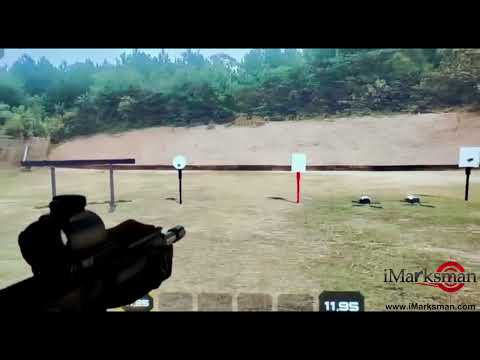

Training with Trigger-Reset Laser Pistols and AR-15s
Why Modern Dry Fire with iMarksman and iDryfire Delivers Real Results
Introduction: The Evolution of Dry Fire Training
Dry fire training has long been recognized as one of the most effective methods for improving firearm fundamentals. However, traditional dry fire suffers from a major limitation: the lack of trigger reset. Manually cycling a slide or charging handle interrupts rhythm, breaks visual focus, and limits the realism of multi-shot drills.
Modern training laser pistols and AR-15 platforms with trigger reset solve this problem. When paired with iMarksman Action Steel and iDryfire laser training systems, shooters can now perform continuous, high-fidelity dry fire training that closely mirrors live fire performance - without ammunition, recoil, or range constraints.
What Is Trigger Reset in Laser Training Weapons?
Trigger reset technology allows the trigger to mechanically reset after each press, enabling:
-
Multiple consecutive shots without manual cycling
-
Realistic split-time and cadence training
-
True multi-target and priority engagement drills
-
Uninterrupted decision-making under time pressure
This capability is critical for Action Steel, qualification prep, and defensive scenarios where follow-up shots matter.
Training Laser Pistols with Trigger Reset
Why They Matter
Laser pistols with trigger reset replicate the trigger feel, travel, and cadence of duty or competition handguns while maintaining a safe, inert platform.
Benefits in iDryfire & iMarksman Systems
When used with iDryfire targets or the iMarksman simulator, shooters gain:
-
Immediate hit feedback (IR or visible laser)
-
Accurate measurement of timing and shot placement
-
Realistic strings of fire without interruption
-
Repeatable drills for skill isolation and improvement
Ideal Use Cases
-
Law enforcement qualification preparation
-
USPSA / Steel Challenge dry practice
-
New shooter fundamentals
-
At-home training with objective scoring
Training with Trigger-Reset AR-15 Laser Platforms
Rifle Training Without the Range
AR-15 laser trainers with trigger reset allow shooters to train:
-
Trigger control and follow-through
-
Target transitions and scanning
-
Reload timing and positional shooting
-
Shoot-move-shoot scenarios indoors
Integration with iMarksman Action Steel
With iMarksman, AR-15 laser trainers enable:
-
Timed steel-style arrays
-
Near-to-far engagement sequences
-
Cover and movement drills
-
Rifle-to-pistol transitions
This makes them ideal for patrol rifle programs, home-defense training, and unit-level repetition without ammunition cost.
Why Trigger Reset Is Critical for Action Steel Training
Action Steel and Rogers-style drills require:
-
Multiple hits per target
-
Precise timing windows
-
Rapid target transitions
-
Accountability for misses
Without trigger reset, these drills lose realism. With trigger reset and iMarksman:
-
Shot cadence becomes measurable
-
Follow-up accuracy improves
-
Shooter workload increases safely
-
Training stress approaches live fire conditions
Safety and Instructor Control
All iDryfire and iMarksman training environments emphasize:
-
Zero live ammunition in the training area
-
Laser-only platforms
-
Instructor-controlled timing and scoring
-
Reinforcement of muzzle and trigger discipline
This enables high-volume repetition without increased risk.
Measurable Training Outcomes
Departments, instructors, and civilian shooters using trigger-reset laser systems with iMarksman and iDryfire report improvements in:
-
First-shot accuracy
-
Follow-up shot consistency
-
Split times and transitions
-
Visual processing under pressure
-
Confidence before live fire
These gains translate directly to range performance and real-world readiness.
Conclusion
Trigger-reset laser pistols and AR-15 trainers represent the next step in dry fire training realism. When integrated with iMarksman and iDryfire systems, shooters gain continuous fire capability, objective scoring, and scenario-driven training that was previously impossible without live ammunition.
This approach reduces cost, increases safety, and—most importantly—produces measurable performance improvements.